
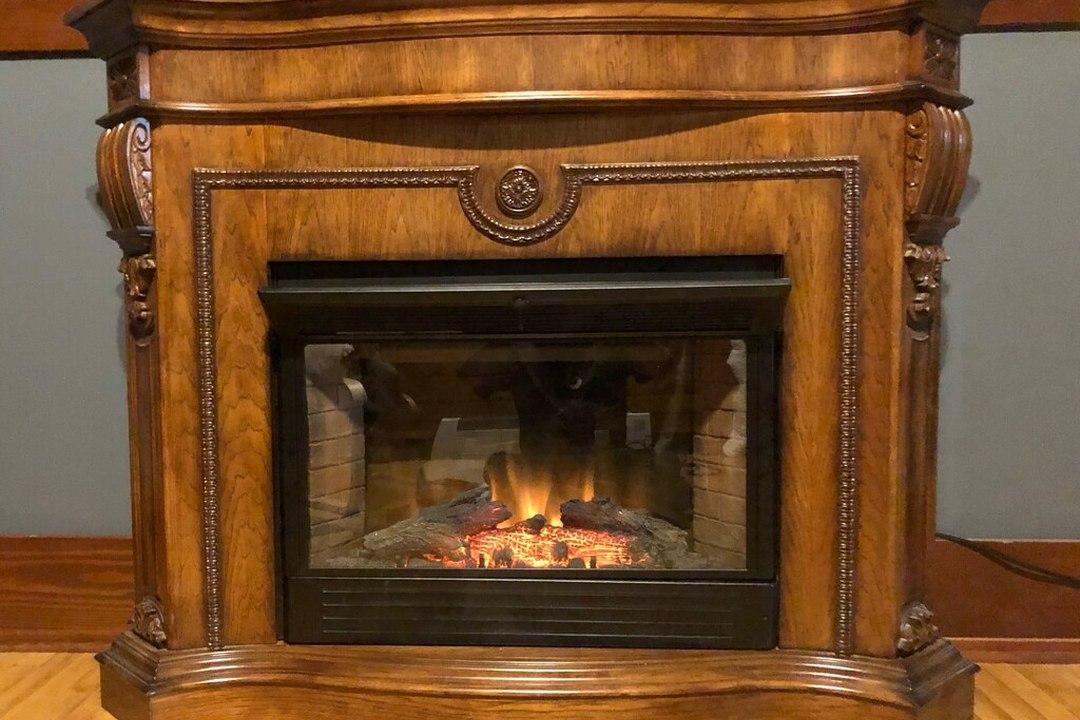
Many apartment and condo buildings in Irvine run gas fireplaces rather than wood burners. For an owner or manager that swaps one set of problems for another: nothing to sweep, but a pilot, a valve, a vent and a pane of glass in every unit, each able to fail on its own schedule. This guide covers how we service them in bulk and what comes back to you.
The same list in every unit
Each gas fireplace gets the same list, so the record for unit 3 reads like the record for unit 30:
- The pilot lights and holds, with a steady flame resting on the sensor it is meant to heat.
- The valve shuts off fully, and the knob, wall switch or remote does what its label says.
- Burner ports are open, the logs or glass media sit where the maker's diagram puts them, and there is no soot building on them.
- The glass front has no cracks, its gasket seals, and the latches hold.
- The vent cap outside is clear of nests, plant growth and paint, and its guard is intact.
- A carbon monoxide reading is taken in the room with the unit running.
- The tenant is shown where the fireplace shutoff is.
Why the glass and the vent cap matter most
Two items generate most of the calls a manager gets about gas fireplaces.
The first is the glass. A sealed gas unit can get hot enough on its face to burn a child's hand. Where a unit has no screen across the glass, we note it on that unit's page and price one where the maker offers it. For a landlord, that note is worth having on file whether or not the screen is fitted.
The second is the vent cap outside. On a sealed unit the cap on the wall or roof is both the air intake and the exhaust. A nest, a shrub grown over it, or a painter's coat across its openings can push exhaust back toward the room. Tenants never look at it. That is why it sits on the list for every unit, every visit.
Doing a whole building in one visit
We agree the order of units with you ahead of time, usually floor by floor or building by building, so you can send entry notices in one batch. The crew moves through the units one after another. At each fireplace we shut the gas at the fireplace valve, clean the glass, logs and burner, check the parts on the list, then relight and confirm the pilot before leaving. The tenant's living room is usable again when we walk out. Units we could not reach are listed by number at the end of the report.
What decides the price, and the next step
Gas fireplace cleaning has no published figure on our site. A building with one model in every unit is a different job from a complex where each owner fitted their own. We price it per building once we know how many units have gas fireplaces, which makes and models are in them, whether the vents leave through a wall or up an old chimney, and whether the caps outside can be reached from the ground.
For reference, the fixed figures we do publish are $165 per fireplace for the yearly unit check and $395 for the camera visit. Many buildings pair the yearly check with the cleaning, so the inspection page and the service record come from one trip.
Repairs found while servicing
Common finds on a building round: a thermocouple or thermopile that no longer keeps the pilot alive, a cracked glass front, a remote receiver or wall switch that has quit, or a vent cap bent by a ladder. Each one is listed against its unit with a written repair price, and nothing is fixed without the manager's yes. A unit that is not safe to run is tagged off, and the manager hears about it before we leave the building. Our gas fireplace repair page covers those repairs in more detail.
Some buildings still have wood openings in a few units and want every unit on the same gas service list. A sealed gas insert fitted into one of those masonry openings runs $2,800 to $5,650 with its liner, and it brings that unit onto the same schedule as the rest.
The record you file
Each unit gets a page with the date, the model where it can be read, the carbon monoxide reading, the pilot and valve results, photos of the glass and the vent cap, and a plain finding. Copies go to the manager, the owner and the association, as you name them. Over a few years those pages build a history for each fireplace, which is what you want in hand when a tenant says the unit has always run badly.
If a tenant reports a gas smell
A tenant who smells gas should leave the unit first and ring the gas utility from outdoors. Once the utility has cleared it, we can come out to find the fault at the fireplace. It helps to put that line in the move-in packet.
Where we work
We service gas fireplaces across Irvine, Costa Mesa, Orange and Laguna Beach and the rest of Orange County. See our gas fireplace cleaning page for the service itself, the Irvine area page for local coverage, and our property manager and HOA page for how per-unit records are set up. The cost of the yearly check is laid out in our rental inspection cost guide.
Whether it is one unit or a full building list, the contact page is the place to start, and we will set the order of units with you.
Own or Manage Units Like These?
Mead Chimney Works books rental chimney and gas unit work from Irvine, sets entry through your manager and files a dated report for each unit, with repairs priced for the owner to approve.