
Plenty of condo and townhouse buildings in Irvine have no brick chimneys at all. The chimney you see from the parking lot is a stucco-skinned frame with a metal flue inside, and the top of that frame is a sheet-steel lid. When that lid rusts, water gets into the frame, and the first sign is usually a stain in somebody's unit. Here is how we trace it and what the fix costs.
How the lid fails
Most original lids are flat, or close to it. Water sits on them after every storm, and over the years rust starts at the corners, the seams and the screw holes. Pinholes become slots. Water that gets through lands inside the frame, on wood the stucco hides, and runs down until it finds a way out. That might be the ceiling of an upstairs unit, a damp patch beside a fireplace a floor lower, or the top of the firebox itself.
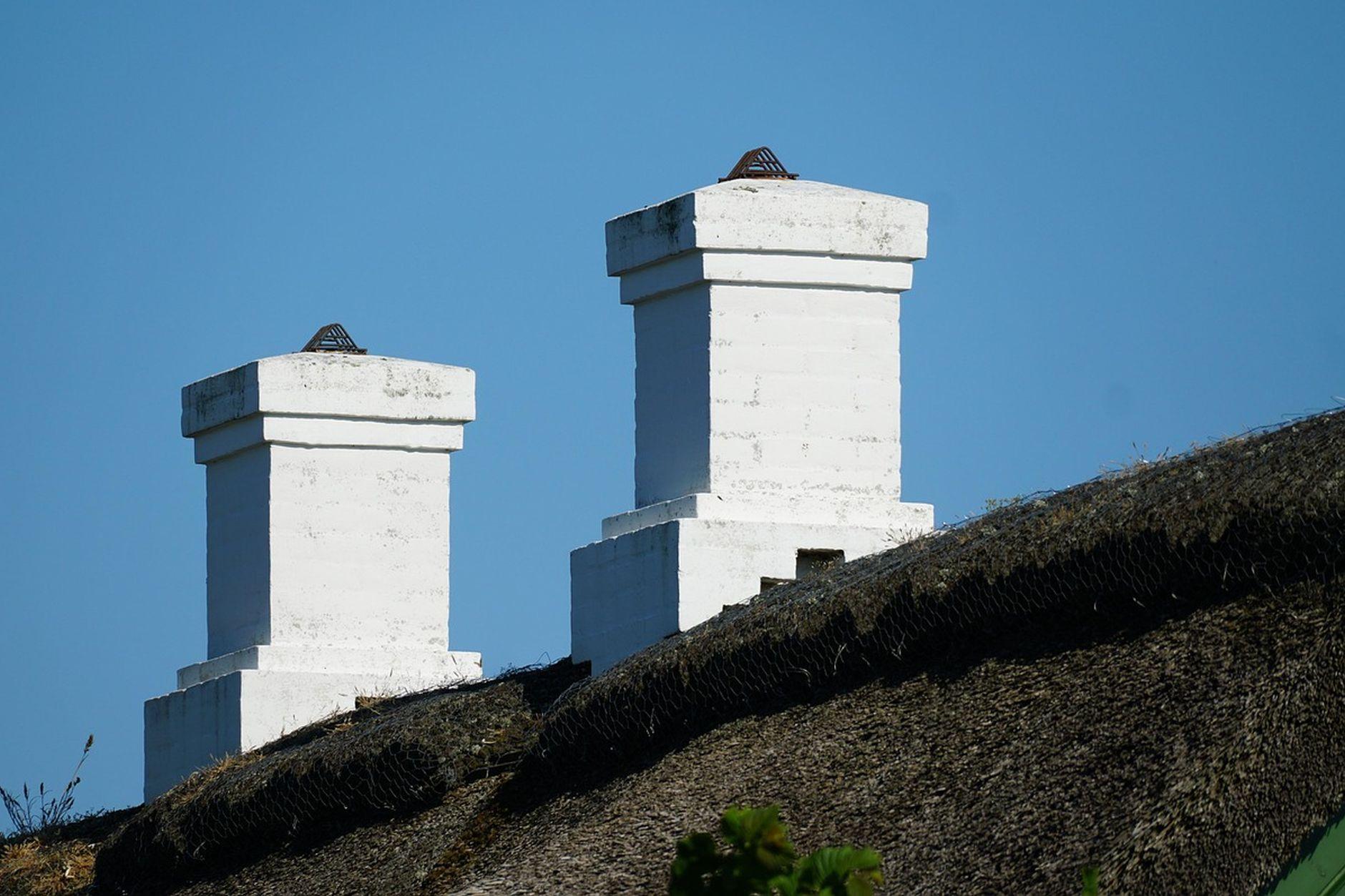
Two other parts at the top fail with the lid. The storm collar, a small metal skirt where the flue pipe passes through the lid, loses its seal. The cap above the flue rusts or loses its screen. Any one of the three can let water in, so we look at all three.
Who calls us, and who pays
Whether the association or the unit owner pays for a chase repair depends on the governing documents. Some treat everything outside the drywall as common area, while others leave the fireplace and its chase with the unit. We do not decide that. What we do is report the source of the water per chase and per unit, with photos, so the board or manager can apply its own rules without guessing.
What the visit traces
On the roof: the lid, the storm collar, the cap, the joints in the siding or stucco, and the flashing where the chase meets the roof. Inside: the stained ceiling or wall, and the top of the firebox where it can be seen. If the source is not plain from looking, we wet one section of the chase at a time and watch for the water to show up inside. The report names the source and the route it took.
What it costs
| Work | Our figure |
|---|---|
| Leak found at the chimney and repaired | $565 to $3,400 |
| New cap over the flue | quoted on site |
| New lid for the top of the chase | Written figure per lid after measuring |
New lids are bent to the measured top of each chase, with a slope or a raised center so water runs off, and a fresh collar sealed around the flue. Because each one is made to size, there is no shelf price. The board gets a written figure for each lid before any metal is ordered.
The leak range is wide because a single lid with a pinhole is a small job, while a chase with soaked framing behind the stucco is a much bigger one. Rotted framing found inside a chase is described with photos, and the board decides on that repair separately.
What decides the figure, and the next step
For one leaking chase, the figure comes down to whether the lid can be patched or has to be replaced, and whether water has reached the framing. For a building, it also depends on how many chases there are and what state the others are in. We confirm both on the roof and send a written figure per chase.
Send the building address and which units show ceiling stains for a written leak and lid quote
Why lids fail together
Buildings put up at the same time got the same lids, from the same supplier, in the same gauge of steel. If one is rusting through, the others are usually close behind. A roof survey that rates every lid in the complex lets the board plan replacements over one or two budget years rather than reacting to each stain as it appears.
That survey fits well with the yearly fireplace check: we are already on the roof and in the units, so each lid's condition goes on the same per-unit page. See our rental inspection cost guide for how that check is priced.
Keeping owners and tenants in the loop
A leak in a condo touches more people than a leak in a house. The owner of the stained unit wants to know when it will stop, the owner below wants to know whether their ceiling is next, and the board wants to know what it will cost. We write the report so the manager can forward the relevant page to each owner as it stands: which chase, what failed, what the fix is, and whether the fireplace can be used in the meantime.
The fireplace below the leak
Water that has been reaching the firebox for a while can rust the metal box of a factory-built fireplace or the damper inside it. When we find that, the report says whether the fireplace is safe to use while the leak is fixed. If it is not, we tag it off and tell the manager.
Where we work
We trace chase leaks for associations and managers in Irvine, Costa Mesa, Orange, Laguna Beach and the wider county. The chimney chase cover and chimney leak repair pages describe each job, and our property manager and HOA page explains how per-unit records are set up.
When a stain turns up, our contact page is the quickest way to get the chase on the roof list.
Own or Manage Units Like These?
Mead Chimney Works books rental chimney and gas unit work from Irvine, sets entry through your manager and files a dated report for each unit, with repairs priced for the owner to approve.